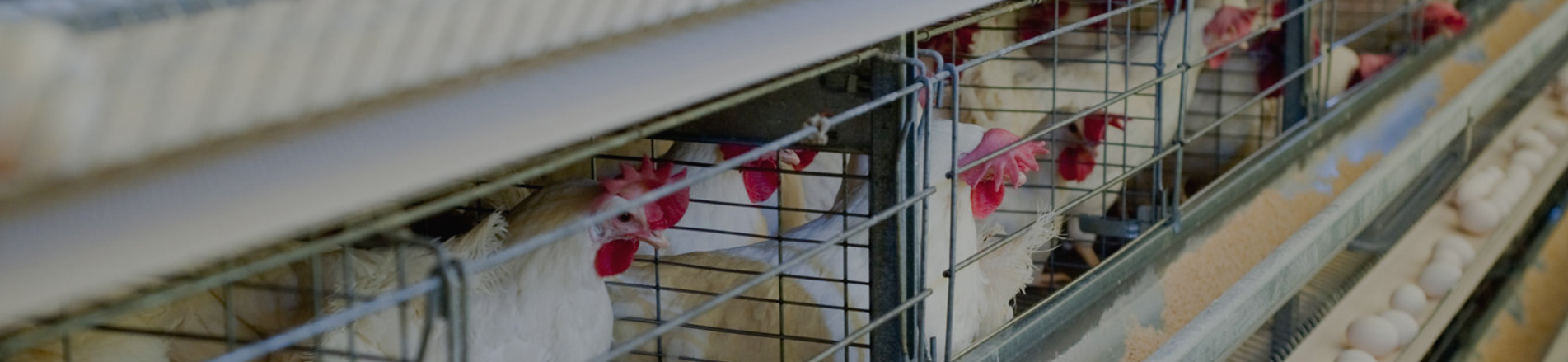
In a laying hen house housing 20,000 chickens, the cage system is the only hardware that comes into close contact with the flock 24/7. It serves as the platform for the chickens’ production and life, the first line of defense for egg cleanliness, and the core framework determining daily management efficiency. This article will dissect this intricate system in its entirety.
I. Cage System: The Steel Skeleton Supporting 20,000 Lives
1. Structural Selection: Why H-Type Stacked Cages?
The mainstream choice for large-scale farming is the H-type stacked cage. Compared to the traditional A-type tiered cage, its core advantages are:
Maximized Space Utilization: Vertically stacked 4-8 layers, the same floor space allows for 3-5 times the number of chickens compared to tiered cages. For a scale of 20,000 chickens, a single chicken house can accommodate them, significantly saving land and construction costs.
Independent Inter-Layer Management: Each layer is equipped with independent drinking water, feeding, and manure removal systems, ensuring no interference and isolating the risk of disease transmission between layers.
2. Materials and Manufacturing Process: The Quality Commitment of Hot-Dip Galvanizing
The cage mesh is the chickens’ lifelong contact surface. We use hot-dip galvanizing to treat all our metal wire mesh:
Coating thickness: Typically above 275g/㎡, 5-8 times that of electro-galvanizing.
Corrosion resistance: Resistant to ammonia gas from chicken manure decomposition and weakly acidic environments, with a normal service life of 15-20 years.
Surface smoothness: After hot-dip galvanizing, it undergoes passivation treatment to eliminate burrs, effectively reducing foot damage and feather wear.
3. Cage size and density design
Single cage depth is typically 60-68cm, and single cell width varies from 60-120cm, flexibly configured according to breed size. Taking Hy-Line Brown as an example, the cage area per chicken is controlled at 450-500cm², with 4-6 chickens per cage group to ensure that chickens can eat simultaneously and prevent weaker chickens from being marginalized.
II. Bottom mesh design: The starting point for a clean egg
The bottom mesh is the ingenious part of cage design; it accomplishes a seemingly contradictory task: allowing the egg to roll away while ensuring the chicken’s feet can stand firmly.
1. 8° Incline: A Clever Use of Gravity
The cage bottom is not horizontal, but rather slopes slightly at an 8-9° angle towards the egg collection direction. After being laid, the eggs gently roll onto the egg trough conveyor belt under gravity, immediately separating from the hen’s body. The significance of this design is:
To prevent fecal contamination of the eggshells at the source;
To avoid damage caused by chickens trampling on the eggs;
To reduce the proportion of eggs on the ground, lowering the cost of manual egg collection.
2. Bottom Mesh Wire Diameter and Mesh Size
The bottom mesh uses a thickened wire diameter of 2.2-2.5mm, providing strong load-bearing capacity and preventing deformation over time. The mesh is designed as a rectangle of approximately 25×50mm, allowing chickens to grip firmly while ensuring chicken droppings flow smoothly without stagnation or sticking.
3. Egg Trough Guard Plate
An arc-shaped egg trough guard plate is installed at the junction of the bottom mesh and the egg collection belt. When eggs roll down, they first contact this buffer plate before smoothly sliding onto the conveyor belt, effectively reducing cracked eggs caused by rolling impact.
III. Feeding System: Ensuring Equal Nutrition for Every Chicken
20,000 chickens consume 2.2-2.5 tons of feed daily. The precision of the feeding system directly affects the feed conversion ratio and flock uniformity.
1. Details of Feed Trough Design
Inward-curved edges prevent waste: The feed trough has a 1-2cm inward-curved edge at the top, physically restricting the chickens’ head-shaking movements during feeding, reducing feed spillage by 2-3%. Don’t underestimate this number; for 20,000 chickens, this saves approximately 50kg of feed per day.
Trough bottom curvature: Smooth curved surface design, no dead corners, no feed residue, preventing mold growth.
Galvanized or PP material options: PP feed troughs are corrosion-resistant and moisture-free, but strength and flame retardancy must meet standards.
2. Feeding System by a Cart: Feeding is completed by a feeding cart that travels at a constant speed along a track, adjustable from 4-8 m/min. Requirements:
Even distribution of feed, with an error margin of no more than 5% between the head and tail of the cage;
Automatic start/stop function with feed level sensor to prevent spillage;
Each feeding session should be completed within 3-5 minutes, simultaneously stimulating the flock’s appetite.
IV. Watering System: A Zero-Pollution Closed-Loop Lifeline
Nipple drinkers are standard equipment in modern large-scale chicken farms, completely eliminating the cross-contamination problems associated with traditional trough watering.
1. Nipple Drinker Layout: Nipples are evenly distributed above each cage, with a density of 3-4 chickens sharing one drinking point. The height is set at a position where the chickens only need to raise their heads and peck slightly, conforming to their natural drinking posture.
2. Closed-Loop Water Line: The entire water line operates in a completely closed loop, preventing external contaminants from entering. Water undergoes the following treatments before entering the water line:
Multi-media filtration (removing sediment and rust)
Precision filtration (5-10 microns)
UV sterilization or ozone disinfection
Regular pulse-type high-pressure flushing of the water line inner membrane removes biofilm and ensures the inner wall of the water line is clean.
3. Leak-proof cup holders
Water cups are placed below the nipples to catch small amounts of water dripping during pecking, preventing the manure belt from getting wet and avoiding excessive ammonia release due to increased humidity.
V. Manure Removal System: Removing Contaminants from the Chicken House
Manure is the main source of ammonia, moisture, and pathogenic microorganisms in the chicken house. The manure removal system’s function is to remove these contaminants as quickly as possible.
1. Independent manure removal belts for each layer
A PP or PVC conveyor belt, 1.2-1.5mm thick, durable and resistant to bending and aging, is laid under the bottom of each cage layer. It runs at least 1-2 times daily, transporting fresh chicken manure to the transverse manure removal ditch at the rear of the chicken house.
2. End Scraper Blade
A polyurethane scraper blade is installed at the end of the manure removal belt to remove manure adhering to the belt surface, preventing backflow and contamination.
3. Tail-End Collection and Treatment
After being transported outside the chicken house, chicken manure can be directly sent to the organic fertilizer fermentation workshop or transported out by enclosed manure trucks. The entire process involves no contact with the ground and no exposure, maintaining a clean environment around the chicken house.
VI. Egg Collection System: Zero-Contact Flow from Laying to Egg Storage
Egg collection is the final interaction between the cage system and the eggs.
Egg Collection Belt Material: Food-grade polypropylene or polyester fiber, flexible and wear-resistant.
Egg Collection Speed: Matched to the peak egg production rhythm, typically operating intensively from 8:00 AM to 12:00 PM.
Egg Flow Nodes: From bottom mesh rolling down → egg trough buffer → egg collection belt conveyor → central egg collection chain → grading and cleaning workshop. No human contact throughout the entire process.
VII. Key Points for Daily Inspection of Cage Systems
For a farm with 20,000 chickens, cage inspection is a daily necessity. Key areas to focus on:
Inspection Item | Key Points | Abnormal Handling
Cage Mesh Integrity | Welds, Plating | Immediately repair any detached welds by spot welding; grind and repaint rusted areas.
Bottom Mesh Angle | Angle between the bottom mesh and the horizontal | Deformation causing angle changes requires timely correction or replacement.
Drinking Nipple | Water discharge, leakage | Blockages require clearing; immediately replace leaking seals.
Feed Trough Level | Cage Head/Tail Uniformity | Adjust the opening of the overhead feeder.
Manure Cleaning Belt Deviation | Belt Edge and Idler Roller Relative Position | Adjust the tension screw to center the belt.
Egg Collection Belt Operation | Slippage, Breakage | Check tension and drive roller wear.
Conclusion
An excellent layer hen cage system is the product of a deep integration of animal physiological needs, behavioral habits, and industrial production efficiency. From the corrosion resistance of the hot-dip galvanized cages to the physical cleanliness philosophy of the 8° angled bottom mesh, from the biosecurity barrier of the closed waterline to the pollution transfer mechanism of the manure removal belt—every detail serves the same goal: to allow healthy chickens to lay safe, standard eggs in a clean environment.
For a large-scale farm with 20,000 chickens producing tens of millions of eggs annually, cages are not a cost, but rather the most worthwhile core asset to invest in.